
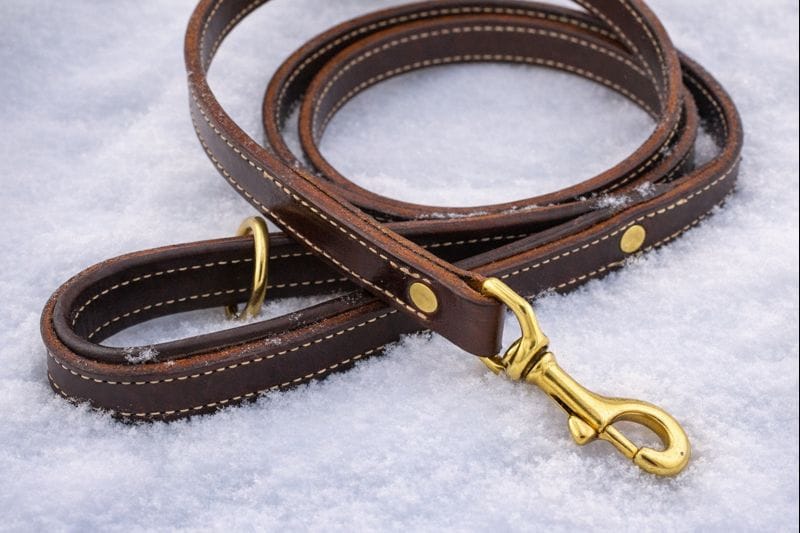
Caring for Leather in the Winter Months
Winter is hard on leather. Cold air pulls moisture from it. Road salt finds its way onto everything. Snow melts, refreezes, and leaves behind grit and grime that slowly works its way into the grain. Whether it’s a well-worn dog collar, a belt you reach for every morning, or a piece that’s been with you for years, winter demands a little extra care.
The good news is that leather wants to last. With a few simple habits, it will.
Keep Leather Clean—but Don’t Overdo It
During the winter, leather picks up more than it does the rest of the year. Salt, slush, mud, and moisture can all dry it out if left to sit.
After exposure, wipe leather down with a clean, dry cloth. If it’s especially dirty, a slightly damp cloth is fine—just water, nothing harsh. Avoid soaking it, and never use household cleaners. Leather doesn’t need to be scrubbed; it needs to be respected.
Let it dry naturally, away from heat sources. Radiators, wood stoves, and forced air may be warm, but they’ll pull oils straight out of the hide.
Condition Lightly, but Consistently
Cold, dry air is leather’s biggest enemy. A light conditioning once every month or so during winter will go a long way.
Use a small amount of a quality leather balm or conditioner—something made for vegetable-tanned leather. Apply sparingly, work it in with your hands or a soft cloth, and let it absorb fully before use. Over-conditioning can be just as harmful as neglect, so resist the urge to overdo it.
If the leather feels stiff or looks dry, it’s telling you something. Listen.
Watch for Salt Stains
Road salt is particularly tough on leather. If you notice white residue forming, wipe it away as soon as possible with a lightly damp cloth, then let the leather dry completely before applying conditioner.
Ignoring salt stains allows them to draw moisture out of the leather over time, leading to cracking and brittleness—two things no amount of conditioning can fully undo.
Give Leather Time to Rest
If you rotate belts, collars, or other everyday leather items, winter is a good time to do it. Allowing leather a day or two to rest between wears lets moisture evaporate and fibers relax, extending the life of the piece.
For dog collars, take them off at night when possible—especially if they’ve been out in wet or snowy conditions. Leather appreciates the break.
Store Thoughtfully
When leather isn’t in use, store it somewhere cool and dry—but not bone dry. Avoid sealed plastic bags or damp basements. Leather needs to breathe.
If you’re putting something away for the season, condition it lightly first. Think of it as laying it down well, so it’s ready when you reach for it again.
Leather has made it through centuries of hard winters—working fields, hunting cover, and long days outdoors—because it was cared for properly. Treat it with the same mindset. A little attention now keeps it supple, strong, and ready for whatever the season brings.
Good leather doesn’t need to be babied.
It just needs to be looked after.